Pages

Showing posts with label poultry. Show all posts

Sunday, December 8, 2013

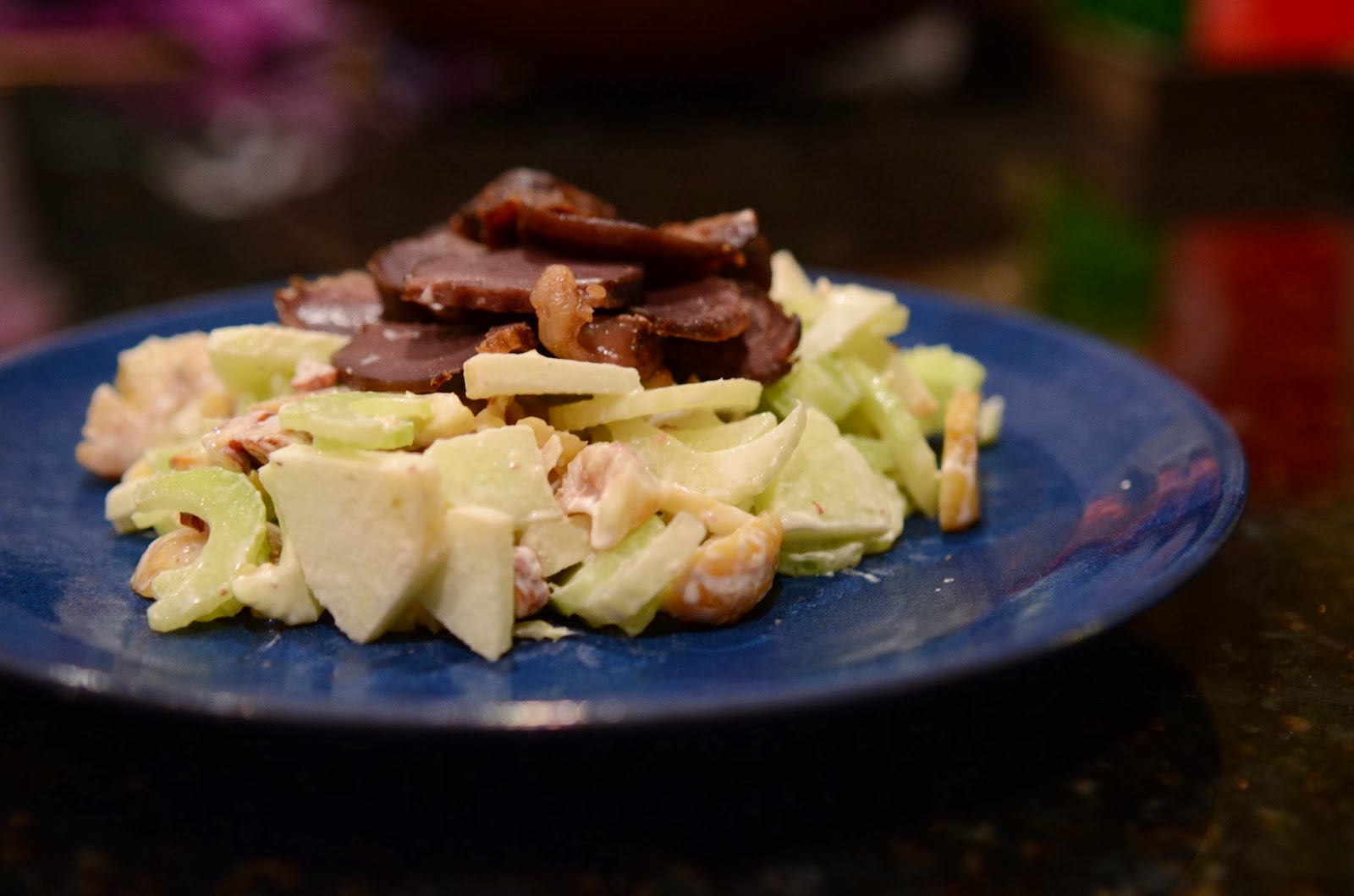
Roasted Goose Heart "Waldorf"


A Recipe For Cooking Without Waste

(appetizer for 2)
1 roasted goose heart (recipe here for "Slow Roasted Date & Port Glazed Goose")
1 green apple
1-2 celeri stalks
1 handful roasted chestnuts
1 tbsp good quality mayonnaise
1/2 tbsp fresh lemon juice
1 tsp Dijon mustard

Peel the apple, and cut into chunks. Strip the celery stalks of tough fibers, and slice thin. Peel the chestnuts* and break up into chunks.

Mix mayonnaise, lemon juice and mustard into a smooth sauce.

Spoon the mayonnaise sauce through the apple, celery and chestnuts and let infuse 20-30 min.

Slice the roasted goose heart thin. Spoon the salad on a plate and top with the sliced heart.

*roasting chestnuts: cut a small cross into the outer shell (to prevent the chestnuts from exploding when roasting). Heat the oven to 200C (400F). Sprinkle lightly with water, and spread out on a baking tray. Roast for 15-20 minutes, then wrap in towel (it will loosen the shell and make it easier to peel). Peel the chestnuts when cooled down enough to handle.

"Like" Life in the Food Lane on Facebook (click here) for updates on new posts and other adventures in the Food Lane.


Slow Roasted Date & Port Glazed Goose

Goose is probably one of the fattiest birds to cook, with its thick layers of coveted goose fat. When cooking a goose, ridding the bird of its fat is your first concern: you don't want fatty goose meat to eat.

This recipe is a "technique-post": how to cook a flavorful, falling-off-the-bone tender and juicy goose, enriched with seductive sweet flavors of port and date syrup. And, with a nod to "cooking-without-waste", it also holds some tips on how to use innards and goose fat.

Slow Roasted Date & Port Glazed Goose

Ingredients
One young goose of 10-12 lbs
roasting stuffing
1 cup coarse chopped raw potato
1 cup (ciabatta/baguette) bread cubes
1 onion, chopped coarse
1 orange, peel and all, quartered
1 bayleaf
1 celery stalk, chopped coarse
basting syrup:
1/3 cup raw cane sugar
1/3 cup melted unsalted butter
1/3 cup date dhibs (syrup)
2 tbsp port

The Fat
When you take the young goose from its wrapping, immediately you can feel its fat coating your hands. The trick is to remove as much excess fat as you can. While goose fat is fabulous to use in cooking, baking, and roasting, fat-riddled goose meat is not nice.

Start with the snow white "loose" fat. You'll find it near the cavity opening. You can literally scoop out chunks of white fat. I also take off excess fat skin, including the "fat flap" (on the neck-side).

Place all removed fat into a pan with a cup of water, and bring to a boil. Slowly simmer to melt the fat. Strain through a sieve and let cool off completely. The fat will separate from the liquid when cooled: scoop it off and keep in a container. This is your FIRST batch of rendered goose fat. The second batch comes from roasting: drain the fat from the roasting pan before the first basting. This fat will be less blond and more aromatic than the water-rendered fat. Both fats are perfect to use as you would butter or oil. Have you ever had potatoes roasted in goose fat? Talk about moreish! I used this goose fat it to make duck confit later that week.


Getting Ready
Next, remove the innards (giblets) from the cavity but do not throw away (see below). Dry the cavity very well with kitchen towel. Brush the cavity with fresh lemon juice and rub with coarse salt. Make the roasting stuffing by tossing all coarse chopped stuffing ingredients together (orange, onion, potato, bread, celery, bayleaf). Put the stuffing in the cavity. The purpose of the stuffing is two-fold: it lends its aromatic flavors to the goose, and at the same time it soaks up fat as the goose cooks. It is not a stuffing you'll eat. Tie the legs together with kitchen string to close the cavity. Score the bird gently across its breast (it will ease the fat to drizzle out during roasting, and allow the skin to crisp up when roasting uncovered). Rub the goose all over with coarse salt.

The innards (neck, heart, stomach, and gizzards) will add flavor to the roasting juices. Clean the innards, and add to the roasting pan. The liver is delicious on its own: season with some seasalt and fresh ground black pepper, sear, and finished with a light brush of the basting syrup. This liver, by the way, may be the goose foie but definitely is not gras: no enlarged fat liver in these young geese.

Finally, the basting syrup is quick put together: dissolve raw cane sugar in melted butter, port wine and date syrup over a low simmer.

With all preparations done, the bird is now ready to go into the oven.
The Roasting
While much of the excess fat has been removed in previous steps, there is still plenty lodged in the goose' skin that needs to go. The following roasting method helps to slowly melt away the goose fat and cook the meat gently:

Preheat the oven to 160C (320 Fahrenheit)

Place the bird breast-side down on a rack in a roasting pan large enough to hold the bird generously. Cover with tinfoil and cook for 1.5 hours breast-side down, covered. 

After 1.5 hours, take the goose out of the oven and turn to breast-side up. Cover again and roast another 1.5 hours breast-side up, covered. Drain off collected fat and keep (see The Fat above).

Take the bird out again and remove the tinfoil. The goose will now roast for another approx. 2 hours, uncovered. It is also time to start basting: brush the goose every 25-30 minutes with the date & port syrup (make sure to reserve 1 tablespoon of the basting syrup).
After a total of approximately 5 hours roasting time, the goose is done: its meat has drawn back from the leg bone, and juices running out are clear. Meat will be juicy and tender, and ready to eat after proper resting.

Wrap the goose loosely under foil to rest for at least one hour. In the meantime, take out the (now roasted) innards, strain the roasting pan juices and let stand to cool (the fat will rise to the top, which makes it easy to scoop it off - this fat you do not use again). Bring the roasting pan juices to a boil, add a tablespoon of the basting syrup, and reduce to thicken. Strain one more time.
we had this beautiful tender, juicy goose meat with sweet potato souffle, cranberry compote,
hearty kale, and reduced roasting jus
As for the innards: keep the heart (and toss the rest: neck, stomach and gizzards have served their purpose of adding flavor and meaty substance to the jus). The heart is delicious. Roasted and tender, it has a meaty flavor and texture that is reminiscent of bresaolo (recipe here).
apple, celery, chestnuts and roasted goose heart
A little "cooking without waste" recap:
  • use all innards except the liver to give flavor and substance to the jus
  • enjoy the liver on its own, seared and lightly brushed with the date and port syrup
  • eat the roasted, tender heart sliced thin over a refreshing salad (recipe)
  • use the goose fat as you would butter (for roasting potatoes, cooking steak, or completely different: to cook meat slowly in fat, also known as confit).


Monday, October 7, 2013

Chicken, Red Wine and Chorizo Stew


I am in temporary accommodation, after recently moving from Dubai to Houston. Our seafreight is still sailing on the ocean, the lease on a house about to be signed. My temporary kitchen is fine, just small and containing a bare minimum to cook with. Empty cupboards, and but a few kitchen utensils. The more I drag into this place, the more I'll have to move with me once we've found our house. So mostly I make do with whatever is here. I did, however, make my cooking life a little easier by getting a Le Creuset Dutch oven, from their lovely store in the Rice Village. It is perfect for one-pot dinners. So far I've already made beer braised beef with caramelised onions, sweet peas, and baby potatoes. Black beans with pork ribs and Cajun andouille. A seafood casserole. And today, a chicken, red wine and chorizo stew. The spices in this dish come largely from the chorizo. It is also why I use half the chorizo to cook throughout, adding the remainder towards the end only.

It is a dish you can make even when your pantry is empty, except for basic salt, pepper, and olive oil. And should you find yourself outdoors camping, it is a great dish to let simmer over a smoldering campfire.

recipe for 3-4 

ingredients
6-8 boneless and skinless chicken thighs
1 tbsp olive oil
1-2 small links good quality chorizo, sliced (if you are, like me, in Houston, use Palacios*)
1 large red onion, peeled, halved and sliced thin
3-4 cloves of fresh garlic, peeled and crushed
1 can chickpeas, drained
3-4 medium potatoes, peeled and quartered
1 glass red wine 
salt/pepper to taste
*I found palacios chorizo in Phoenicia (Houston, Westheimer branch). I bought four small links vacuum-packed per two. Palacio chorizo is made in La Rioja, Spain.
method
  • Season the chicken thighs
  • Heat olive oil in a casserole
  • brown the chicken lightly over medium to high heat, and take out
  • turn the heat down, add the sliced onion to the casserole, and slowly (over low heat) soften. Stir regularly
  • turn the heat up to medium-high and add the red wine. Stir the bottom to loosen all bits. Let the alcohol cook off (for a minute). add a cup of water, the garlic, half of the chorizo, and the chicken thighs. Place the potato quarters on top and cover with the lid. 
  • Simmer over low heat for about 30 minutes. Keep an eye on the liquid: if it gets too dry, add some water (or stock, just be careful the dish doesn't get too salty)
  • after 30 minutes, add the chickpeas and the remainder of the chorizo. Let simmer for another 5 minutes or so. You can serve straight away, or later (this is an ideal dish to make ahead). 
  • Serve with a green salad and some crusty bread.

A personal post on moving countries was recently published: Under A New Sky

Follow Life in the Food Lane on Facebook for updates on new posts and other adventures in the Food Lane.

Sunday, January 13, 2013

Easy Chicken with Preserved Lemon & Green Olives

and a couple of more suggestions to use preserved lemon following below...


Chicken with Preserved Lemon and Green Olives is a Moroccan dish, traditionally cooked in a tajine. You can also cook it in a casserole. I love the combination of flavors, and find this chicken with its refreshing and savory flavors absolutely irresistible. Recipes for chicken with preserved lemon and green olives abound, some more complex than others. This one is a tried and tested simple home-cooking version, perfect for "a gourmet meal on a working day".

No oil is used and chicken skin is discarded. It reheats well, and can be prepared ahead*. This recipe uses whole chicken, divided into parts. If you cook with the bones-in, it gives a deeper flavor to the dish.


all ingredients mixed and ready to simmer

Chicken With Preserved Lemon & Green Olives
(recipe for 3-4)
1 whole chicken, divided into thighs, drums, breasts (on the bone) and wings (which can also be left attached to the breast part).
2 medium onion
2-3 cloves of garlic
2 tsp grated fresh ginger
1-2 preserved lemon (depending on size)**
1 cup green olives (I use the ones we find here in the Middle East: pickled with lemon)
1/2 cup finely chopped fresh koriander
1/4 cup finely chopped parsley
1 tsp turmeric
1 tsp ground cumin
1/2 tsp ground coriander
dried chili (to taste)
salt/pepper to taste
1/2 cup water (approximately)
  • tip: the best way to prepare ahead is to mix all ingredients, leave to marinate for a few hours, or even overnight. It really infuses all the flavors well.
  • Peel the onion, cut in half and slice into thin half moons. Peel the garlic and crush. Chop the herbs fine.
  • Put the chicken parts in the casserole and add all ingredients except the water. Toss gently to mix, add the water. Bring to a boil on stove top, cover with a lid and reduce heat to low. Simmer slowly with closed lid for 45 minutes to an hour. 
  • I sometimes add small potato parts for the last half hour, to steam in the vapors of chicken, lemon, olives and herbs. And/or diced zucchini for the last five minutes. Serve it with fluffy couscous or quinoa (for added food pleasure: garnish with raisins plumped with rose water).


**when I make preserved lemon, I use a recipe from Claudia Roden's Middle Eastern Cooking: quarter whole lemons, but not all the way through. Liberally rub sea salt into the cuts and press the lemons in a jar you can close. Press well: the idea is that the juice from the lemons rises to the top. Generally, use a tablespoon sea salt for every lemon. Add more fresh lemon juice if there's not enough to fill up the jar. 

Preserved Lemon Gremolata 
The skin of 1 preserved lemon, chopped fine, mixed with finely chopped parsley (about 2 tbs) and a crushed and minced clove of garlic, bound together with olive oil. It will go fabulous with grilled lamb, for instance. 

Roasted Eggplant & Preserved Lemon Salad
Add thin strips of preserved lemon (1/2 lemon will do) to one cup of diced, roasted eggplant. Toss with olive oil, fresh koriander, chopped fine, a sprinkling of chili flakes, a handful of cherry tomatoes (cut in half) and season to taste.


A recipe for barley risotto with garden peas, okra and preserved lemon click here. Or try preserved lemon in a salsa with grilled swordfish and black lentils (recipe here)

Follow Life in the Food Lane on Facebook for updates on new posts and other adventures in the Food Lane.


Tuesday, September 25, 2012

Braised Quail & Marinated Zucchini Salad


This is a recipe based on leftovers. Simple, straightforward. I had leftover braised quail, but this works equally well with leftover roast chicken, or even easier: smoked salmon, prosciutto, (grilled) prawns. The choice is yours: it is all about what you have (leftover) in your fridge, and how you can use it in a creative, mouthwatering way. Or, you can go and get the same ingredients to make this refreshing salad (see below for alternative vegetarian and/or vegan suggestions).

This is what I had:

2 leftover quail (braised with fresh za'atar (the herb), garlic, onion, carrot, celery, and red wine)
1 large zucchini (courgette)
lemon
fresh parsley
microgreens (see picture below)
and from the pantry: olive oil, Maldon salt flakes, and rose peppercorns

Pluck or shred the meat from the quail carcass. If you think the meat is too dry to eat as is, add a little olive oil and some fresh lemon juice to the quail meat, and spoon through. Adjust seasoning to your liking. I did not add anything: the quail meat was tender and juicy, and well-infused with flavors from the braising liquid. Shred parsley leaves into smaller pieces and mix in with the quail meat.

Slice the (raw) zucchini very thin. Whisk olive oil with lemon juice until well-mixed. Pour over the zucchini and carefully mix into the prepared zucchini without breaking the delicate slices. Let marinate until the zucchini slices have softened (10-20 minutes). Arrange on a plate and sprinkle salt flakes over the slices.

Arrange the quail meat in the middle on top of the zucchini slices. Garnish with the rose peppercorns and microgreens (if you don't have these, use garden cress and a combination of green herbs such as parsley, basil, and chives).


VEGETARIAN VERSION: USE CRUMBLED GOAT CHEESE (WITH A LITTLE HONEY AND THYME)

VEGAN VERSION: USE ROASTED RED PEPPER (PEELED & SEEDED) AND FRESH BASIL


microgreens: mustard cress (left), shiso cress (middle), and one I forgot the name of

zucchini carpaccio: same marinade (here with shredded basil) and preparation for the raw zucchini

Sunday, May 6, 2012

Molasses Marinated Quail


I love quail, and have cooked this little bird often. Once, many years ago, I even cooked quail on a one-burner camping stove in front of our dome tent in Bédoin near the Mont Ventoux in Southern France. The quail came with their heads attached, something I had not noticed when I got them at the local market. It was a bit of a struggle to remove these with the rather blunt knife I had. Not to mention preparing it all on a small and wobbly camping table. I cooked the quail whole and camping style. You know, with large chunks of onion and garlic, bunches of fresh herbs and seasoning from one of these multi-spice shakers. With a great Gigondas from the vrac bought at the winery earlier that day and looking out over the Provence as night was unhurriedly falling, I remember thinking it was the best bird ever. 

I hadn't been to New Orleans then. Where many a time I found a bird on my plate that "wow-ed" me speechless. Duck basted with spicy sweetness and slow-roasted until the meat fell off the bone, making me forget all manners and decorum. Semi-deboned quail stuffed with a sweet cornbread and spicy andouille stuffing. Squab glazed to perfection, again its spicy sweetness highlighting the gamey softness of the bird. 

I have had other, gorgeous quail since. Roasted with pomegranate and fresh za'atar. Butterflied, marinated in curried yogurt and grilled over charcoal. Or dripping with sweet soy and ginger sauce. Quail is in the same family as pheasant. Yet where pheasant is best prepared in a subtle manner to do the bird's delicate meat justice, quail thrives on bold, outspoken flavors. Below recipe is based on gastronomic memories of New Orleans. Put on some funky jazz, and get cooking!


Marinade is for 2 quail (1 quail pp for main/half quail for appetizer)

Marinade
2 tbsp molasses sugar*
1 tsp cayenne pepper (or to taste)
pinch of ground allspice
pinch of ground cinnamon
1 tsp sharp (Dijon) mustard
1-2 clove garlic, crushed
½ tsp white pepper
½ tsp dried thyme
½ bottlecap balsamic vinegar (add more if marinade is too sweet, can also add lemon juice to even out)
1 bottlecap smooth (bourbon**) whisky (optional)

Prepare the marinade by mixing all ingredients in a bowl. Add a little water if too thick. Let stand at least 30 minutes to infuse all flavors. Cut the quail in two halves through the back bone first, and then carefully through the middle of the breast part. Toss in the marinade, and make sure all of the bird is covered (best to do this in a ziplock back, so you can shake and turn over every now and again). Marinade for at least 2 hours, can do overnight. Take the birds from the marinade and pat dry with a kitchen towel. Strain the marinade and reduce until thick and syrupy. Keep until ready to use. Heat a non-stick pan until hot. Season quail with salt, and pan-grill on all sides, turning regularly until cooked through (you know it is done when the meat is pulling away from the leg bone). Rest for a little while (to allow the juices in the meat to settle). Reheat the marinade sauce and toss the quail in it quickly to coat well on all sides. Keep some of the marinade sauce aside to drizzle over the quail before you serve it. You can serve hot or cooled to lukewarm.

In the photograph, the quail is served as an appetizer salad. The quail was filleted into boneless breast and separate leg and served with marinated radish, cucumber, beetroot and tomato, as well as a salsa verde. 


*molasses is a by-product of processing sugar cane or beets into sugar. It is the thick, dark liquid that remains after the sugars in the raw sugar cane or beet juice have crystallized. Molasses is also obtained from refining other sugar products (grapes, pomegranate, dates, etc). Natural molasses sugar (unrefined cane sugar packed with natural molasses) has a distinctive bitter-sweet taste.  The molasses marinade is also great to baste roasting duck, or glaze poultry and/or beef/game.

**Bourbon is a distillate made in the USA, aged on barrel, and made primarily from corn. For the recipe, any smooth whisky will do. It is optional though: while it adds another dimension to the marinade, the flavors of the marinade stand perfectly fine without the addition of whisky.