Pages

Showing posts with label salads and soups. Show all posts

Tuesday, September 2, 2014

Not Quite Beetroot Soup


Not-quite-beetroot soup, the finished soup has the tartness of tomato, fragrance of the roasted pepper, and sweetness of the beetroot combined. It doesn't taste predominantly of beet, yet it does have its lush red color. I like to use a dash of smoked paprika powder (or even ground chipotle). This soup is ideally made with equal parts each of beetroot, red capsicum, and tomatoes. Even more ideally, the beetroot and capsicum are roasted first, to release their natural sugars and add a deeper flavor to the finished soup. As an appetizer (hot or cold) this soup is both a palate cleanser and teaser for more to come. It is a pretty soup, flavorsome, and intriguing. Your dinner guests will love it.

In this recipe: suggestions for a three-course dinner party.

Not Quite Beetroot Soup
recipe for 3-4 appetizer cup

1 medium beetroot 
1 red capsicum
3 ripe (roma) tomatoes
1 medium/small red onion
2 cloves of garlic
1/2 tsp ground cumin
1/2 tsp cayenne pepper (or to taste)
1/2 tsp paprika powder (smoked paprika if you like)
juice of half a lemon (or to taste!)
2-3 cups water
tbsp olive oil
  • Roast the beetroot and red capsicum in a hot oven for 30 minutes. Turn regularly. Put the charred capsicum in a plastic bag to loosen the skin.
  • Peel beetroot and dice. Peel, clean, and dice the capsicum. Peel the tomato and dice small. Chop the onions fine.
  • Heat the olive oil over medium heat in a casserole and add the onions. Lower the temperature if the onions sizzle too much (you want to gently sweat the onions until they softened, about 5 minutes). 
  • Add the beetroot and capsicum, cook with the onions for about 5 minutes (low heat)
  • Add the tomatoes, the garlic, and the spices. Bring the heat up to high and stir everything around for 1-2 minutes. 
  • Add enough water to cover (but not so it swims too much).
  • Simmer for about 20 minutes
  • With a hand-held blender, puree the soup until smooth. Add lemon juice to taste.
  • Serve hot with a dollop of thick cream. Or chilled with a garnish of fresh herbs (basil, koriander, and mint work wonderful) or even edible flowers.
Make a light supper of this flavorful soup with crisp, hot crusty bread and a selection of goat cheese

Suggestions for a Dinner Party
For a vegetarian dinner party, start with the enticing flavors of the Not Quite Beetroot Soup, and follow with a beautifully plated Pea & Okra Barley, topped with hearty pan-fried mushrooms (porcini, sliced king oyster mushroom, or even just button mushrooms), and finish with roasted peaches and a lush custard.

Of course, the colorful flavorsome soup does equally well as appetizer for  a meat main like Braised Lamb Shanks or Orange, Sage & Fennel Roasted Pork Shoulder

Saturday, August 2, 2014

Beach-Dug Clam Chowder

We went clam digging in Maine. What an experience! It had been years and years since I stood hunched over a muddy beach with a shovel and a bucket. At the time, I was a young child on a Zeeland beach on the North Sea coast, digging for razor clams. The idea is the same: you look for a little "air hole" in the sand, and you dig. Not ON the hole, just near enough. And then you claw with your hands in the sand, removing it carefully until you feel the shape of the shell. This time, in Maine, big clams prove worth the finger-scraping effort and the mud-grey nails by the time the tide starts to roll back in.

Beach-Dug Clam Chowder
10 or so big clams (or less if you didn't dig long and hard enough)
1 cup heavy cream
1-2 cups clam juice (what you steamed the clams in)
1 cup diced kohlrabi
1 cup diced potatoes
1/2 cup diced fennel
1/2 cup chopped onions
1 garlic clove, crushed
1 small twig of fresh lovage
1 small bay leaf
1 twig of fresh thyme

Steam the clams open 2-3 minutes in water to which you've added a splash of white wine, a pinch of salt, and some coarse chopped aromatic vegetables like onion, leek, celery and garlic. Let cool enough to handle, then pick out the clam, drain every last drop of clam juice from the shell into a collecting bowl. Strain the steaming liquid from the pan also into this bowl, but use a cheesecloth if the water seems gritty.

Put the kohlrabi, potato, fennel, lovage, thyme, onion, bay leaf and garlic in a pot with the clam juice: use enough clam juice to just cover the vegetables. Simmer for up to 15 minutes, or until soft. Remove the lovage, thyme and bay leaf, and add the cream. Add more clam juice if the soup is too thick (or not if you like it that way). Bring to a slow boil and add the chopped, cooked clams. Turn off the heat, and leave to infuse for 2-3 minutes. Add some chopped chives, and serve with a good chunk of hearty bread and good quality butter.

ps. I made exactly the same chowder minus the clam juice and clams, using fresh haddock.


I cooked this staying at the New Moorings Farm in Sedgwick, Maine. See the story With A Pitchfork In My Kitchen here

Tuesday, July 29, 2014

Beetroot & Horseradish Tzatziki

It took a bit of an effort to wiggle the horseradish free from its rich dark earthen bed. And even more effort to scrape it clean and grate it. But there I had it: grated horseradish, fresh from the small Maine farm where I was staying. The beetroot was so fresh, its juice ran free the moment I cut it. And then there was the garlic: fresh and juicy, it broke rather than crushed when I hit it with the flat part of my kitchen knife. The smell of freshly picked produce, I tell you: it is intoxicating!

Beetroot & Horseradish Tzatziki

2 small beetroot (or 1 medium), grated
1 or 2 cucumber (to make a cup full of grated cucumber)
1 tbsp freshly grated horseradish
1 tbsp chopped chives
1 cup thick (Greek) yogurt
1 tsp Dijon mustard
1 small tsp sea salt (or to taste)
1 large clove of garlic

Grate the cucumber fine and drain in a sieve until most excess liquid is drained off. Add to the grated beetroot and horseradish in a bowl. In another bowl, mix together yogurt, chives, mustard, garlic, and salt. Taste if it is to your liking, and then carefully spoon in the cucumber, beetroot and horseradish.

I served it with toasted pita bread and a side salad of cherry tomatoes, diced kohlrabi, small lettuce leaves, and edible flowers.

I cooked this staying at the New Moorings Farm in Sedgwick, Maine. See the story With A Pitchfork In My Kitchen here


Sunday, April 13, 2014

Lamb Kofte, Saffron Rice, and Colorful Salad

When minced lamb smells good enough to eat raw, close your eyes and you can almost picture the animal running around in a meadow rich with grasses and wildflowers. On my kitchen board was farm-fresh, pasture-raised lamb from a local ranch (link). This lamb begged for fresh herbs, for natural sweetness, for a hint of spiciness. It longed for a gentle roll on the hot grill. This lamb also sought a tantalizing liaison with the vibrant colors and crisp flavors of fresh vegetables, and the fragrance of saffron in rice. This was a weekday meal for us, one we loved so much I decided to cook the same for friends when they came to dinner. And like often, the question arose: "so do you cook like this every day?" Well, yes, I do. When I'm not eating out somewhere.

Dessert was a yogurt-coconut-lemon cake, a recipe for another time. Following recipes are for 3-4: adjust amounts accordingly!

Colorful Salad
1 orange
1 medium fennel bulb
1/2 small red cabbage
4-5 radish
1 medium red beetroot
2-3 scallions
2 small cucumber
fresh herbs (to taste)

vinaigrette
You can use any vinaigrette you like. Here's one I use
2 tbsp olive oil
1 tbsp Tarragon Vinegar (I make my own; use another vinegar if you don't have)
1 tbsp fresh lemon juice
1 tbsp tahina (if you don't like tahina in this vinaigrette, use mustard)
1 tbsp finely chopped fresh mint and parsley

Prepare the vegetables: grate the beetroot, shave fennel and cabbage, slice radish thin, dice the cucumber, and chop the scallions. Layer in a wide bowl. Clean the orange and cut segments (without white). Catch the orange juice that spills and add to the vinaigrette. Add the orange to the salad, scatter fresh herbs over it all. Make a vinaigrette by mixing all ingredients together. Add the vinaigrette just before you're ready to serve. Toss at the table (all separate colors will run red the moment you toss the salad, owing to the beetroot).

Lamb Kofte
500 gr ground lamb
1 tbsp mixed spice (equal amounts of cumin, ground ginger, paprika, cayenne)
1 tbsp finely chopped fresh mint and oregano (2/3 mint, 1/3 oregano)
sea salt & fresh ground pepper to taste
1 tbsp tomato paste
1 tbsp dhibs (date syrup)
1 clove of garlic, minced

Saffron Rice
2 cups basmati rice
4 cups water
1 pinch saffron threads
1 medium/small onion, diced fine
1 tsp salt
1 tbsp butter

Rinse the rice 2-3 times. Pound half of the saffron threads in a mortar and pestle. Bring 1 cup water (of the 4 cups) to a boil, add to the pounded saffron and leave to infuse. Melt the butter in a large pan. Add the onion and sweat gently over low heat until soft and translucent. Add the rice and stir to coat in the onion-butter. Add the pounded saffron, and the water. Add salt to taste, and the rest of the saffron threads. Bring to a boil and let simmer slowly until fluffy and soft.

Cucumber, Mint & Yogurt Sauce
1 cup thick yogurt (if you use plain yogurt: let it strain in a cheesecloth for an hour or so)
1 small cucumber
1-2 cloves of garlic, minced (depending on how much garlic you like)
1 tbsp finely chopped fresh mint
salt flakes and fresh ground pepper to taste

Grate the cucumber, and let it strain in a sieve to get rid of excess liquid. Mix with the thick yogurt, and add garlic, mint, and seasoning.
and this is what happens when you toss the salad: all shades of delicious red

A recent post on Texas Local Meat: In My Kitchen here

My meat came from A Better Way Beef, a local farm I found through www.eatwild.com

Find me on Facebook (here) and Twitter (here)


Wednesday, March 26, 2014

Balqees Honey Pear Salad

This is a salad that marries the well-known combination of pear, nuts, and blue cheese with a hint of the Middle East, a touch of the Southern states, and a memory of liquid deliciousness: raw Yemeni saffron infused honey by Balqees (link).

When I moved from Dubai to Houston, one of my worries was that I would not be able to find the great flavors of the Middle East, from spices to condiments. And then I found Phoenicia. Founded by an Armenian couple in the 1970s, Phoenicia is as close to the Middle East as you can get in Houston. I happily started to browse through my Middle Eastern cookbooks again. One thing I haven't found is the prized raw Yemeni honey, which in Dubai you can find sold in big glass jars for you to taste, compare, and choose.

This salad vaguely evokes Arabic flavors in the rose water that lends an aromatic touch to the dish. The soft, mild blue cheese and the characteristic flavor of pecans bring it home to Texas (yep, still getting used to calling it "home"). You can make this salad with any honey, but it will never have that same depth of deliciousness or that velvety richness that comes with natural, raw honey. Saffron-infused at that. Below recipe is loosely based on Malouf's Honey-Roasted Pear And Walnut Salad (page 261 of his must-have cookbook New Middle Eastern Food).

Balqees Raw Honey Roasted Pears, Blue Cheese and Pecans

Recipe for 4
2 ripe pears
fresh lemon juice
1 tbsp butter
1/2 cup roasted pecans
150gr crumbled soft, mild blue cheese (I used an artisanal Vermont blue cheese)
1 tbsp Balqees Raw Yemeni Honey (saffron-infused if you have: an unforgettable taste)
1 splash of rosewater
100gr (or 2 cups full) of young leaf salad
a handful of fresh, small herb leaves (mint, thyme, basil, for instance)

Cut each pear (skin on) into six wedges, cut out the cores, and sprinkle with fresh lemon juice to prevent discoloring. Heat the butter in a skillet until melted. Add the pears and toss regularly over high heat for 1-2 minutes (make sure each side "gets a turn"). Add the honey and toss well to coat (it caramelizes quickly). Add the rosewater (steam will rise), and toss some more, always over high heat. When the pears are nicely coated and caramelized, take them out and keep warm.

In the same pan, toss the pecans over high heat. The residue of honey-butter-rosewater left in the pan will cling to the nuts. Sprinkle some coarse salt on and let cool (make sure to separate the individual nut pieces: once they cool, the honey will stick them together like glue).

Carefully mix all ingredients together and serve. Keep aside some of the blue cheese, 2 slices of pear, and some pecans to garnish the top.

A huge miss: a Balqees shop around MY corner, where I can go, taste that gorgeous honey, and decide on which jar to take home. From the renowned Sidr honey and infusions from wildflower to saffron, Balqees is paradise for a honey lover! In this photo toasted raisin-walnut bread, an artisanal goats cheese from Burgundy, and raw Yemeni Wildflower honey. You don't need much else!

Monday, February 10, 2014

An Elegant Hot Dip and Shrimp Boil Chowder

Last week, a ziplock full of leftover shrimp boil came my way again (see "Shrimp Boil Artichoke Salad" here). Juicy shrimp, spicy sausage, mushrooms, corn, and potatoes soaked with the flavorful boil. We ate with gusto, and still there was enough left over for me to "play" with. Cold outside, fireplace burning, I made a chowder with the remaining potatoes, shrimp and corn. And a lush "shrimp boil avocado" dip. Both recipes below, and as usual: the list of ingredients suggests alternatives if you do not have the same leftovers. You will need to spice it up to taste, though: it's only when you have such wonderful shrimp boil leftovers that the main ingredients provide a depth of flavor that needs very little else.

Shrimp Boil Chowder
A great way to use those leftover red potatoes, cooked in the spicy boil and soaked with seafood and spice flavors. This chowder could not be any easier: it takes all of its flavor from the shrimp boil. The only "extra" ingredients in this chowder are the stock, the cream, and 1/2 cup of finely diced celery, which I add for a refreshing depth, but could be left out. One thing: these shrimp boil potatoes are spicy. And as a result, your chowder will be spicy. If you want to tone down the heat in the chowder, add a large russet potato, chopped up and cooked (remember: you are using boiled potatoes, so you can't just add the russet potato uncooked - it's why I suggest you use cooked russet potato).

Ingredients
10 or so small boiled red potatoes (leftover from shrimp boil)
1 large russet potato, cooked (optional: it tones down the overall spiciness if using shrimp boil leftovers)
1 cup cooked corn kernels, scraped from the ear (leftover from shrimp boil, keep the "stalk")
1 cup chopped cooked shrimp (leftover from shrimp boil, keep 1 or 2 for garnish if you wish)
1 liter well-seasoned organic stock (approx. 4 cups, or 1 quart)
1/2 cup finely diced celery
1/2 cup double (whipping) cream
salt/pepper to taste

Heat the stock, and add the bare corn "stalk". It will lend some additional flavor to the stock. Take it out before you blend the soup! Peel the red boiled potatoes, cut up and add to the stock in a large pan. Cook to infuse for 2-3 minutes, then puree with an immersion (handheld) blender, but watch the ratio potato-liquid. You want a thick, creamy soup, so it may work best to keep a cup or so of the stock separate, blend the rest to a puree and add the remaining stock as you go until you achieve the desired thickness. At this point, add the finely chopped celery to soften. After 2-3 minutes, add the corn kernels, chopped shrimp and cream, and cook through for 2-3 minutes. Check the taste and adjust if needed. Serve hot with crusty French bread.

Shrimp, Corn and Avocado Dip

1 cup chopped boiled shrimp (or leftover from shrimp boil)
1/2 cup fresh cooked corn kernels (or leftover from shrimp boil, scraped from the ear)
2-3 cloves garlic from the shrimp boil (soft and soaked with flavor) or 1 large fresh garlic clove, chopped fine
1 cup cream cheese
1/2 cup sour cream
1 medium ripe avocado, cut into chunks
1 handful fresh parsley (leaf only), chopped fine
1 handful fresh koriander (leaf only), chopped fine
1 tsp (or a squirt) fresh lime juice
a few drops of tabasco, or to taste
salt/pepper to taste
1 cup grated cheese (I use a 50-50 ratio of parmesan and mild aged farmer's Gouda), optional

Mix together cream cheese and sour cream until creamy and free of any lumps. Mix in chopped herbs and finely chopped garlic. Season with the lime juice and tabasco (careful with the latter if you are using shrimp boil leftovers). Add the chopped shrimp, corn and avocado chunks, and carefully spoon through. Put in an ovenproof serving dish, cover with the cheese and bake in a hot (400F, or 200C) oven for 10-15 minutes, or until cheese has melted and dip is bubbling. Serve immediately, for instance with blue corn chips.

For an elegant appetizer, spoon the avocado shrimp boil dip in filo cups, and bake at 350F for about 10 minutes, or until hot throughout.

You can also serve this avocado shrimp dip cold (room temperature). In that case, leave out the cheese and sprinkle with fresh herbs and chunks of avocado instead.

You may also enjoy: "Shrimp Boil" and Artichoke Salad


Find Me On Facebook Here


Saturday, December 21, 2013

"Shrimp Boil" & Artichoke Salad

This recipe is based on leftovers, from fresh artichokes and roasted sunchokes to a precious gift: a ziplock bag full of leftover shrimp boil. A shrimp boil is a one-pot meal that starts with a good, well-spiced stock in a large pot with strainer. My friend cooks it outside, on a big burner. A born and bred New Orleanian of Italian descend, he is one of these innate gourmands whose body language even changes when talking about food. As if he's physically embracing all the deliciousness of what he is talking about. His eyes sparkle with pleasure when he describes a recipe, a method of smoking, a time to "soak up all these flavors".

In making shrimp boil, he carefully seasons his stock, always smiling when he mentions the "holy trinity" of Cajun cooking: onion, bell pepper and celery. When he is happy with the taste of the stock, he adds skin-on baby potatoes, pieces of andouille, and whole button mushrooms, each ingredient enjoying the interaction of giving and taking flavor. He adds corn on the cob just before adding the main characters: a huge heap of unpeeled shrimp. He stirs, times, tastes, stirs again, fishes out a potato, breaks it open, takes a bite, looks pensive across to the rest of us, and - nodding happily - he grabs the bag of ice he has ready, and empties it in the steaming hot pot of shrimp boil. It is to stop the cooking. He leaves the shrimp to soak up all the flavors, and shortly after lifts out the strainer. The shrimp boil is ready to be eaten. He can't wait for the crawfish season to begin, he says. And the mere thought is making my mouth water.

When we left that evening, he rushed to the fridge and handed me a ziplock bag with leftover shrimp boil. The only reason there were any leftovers, by the way, is that his generous shrimp boil had been preceded by an irresistible scrumptious house-smoked turkey and andouille gumbo.

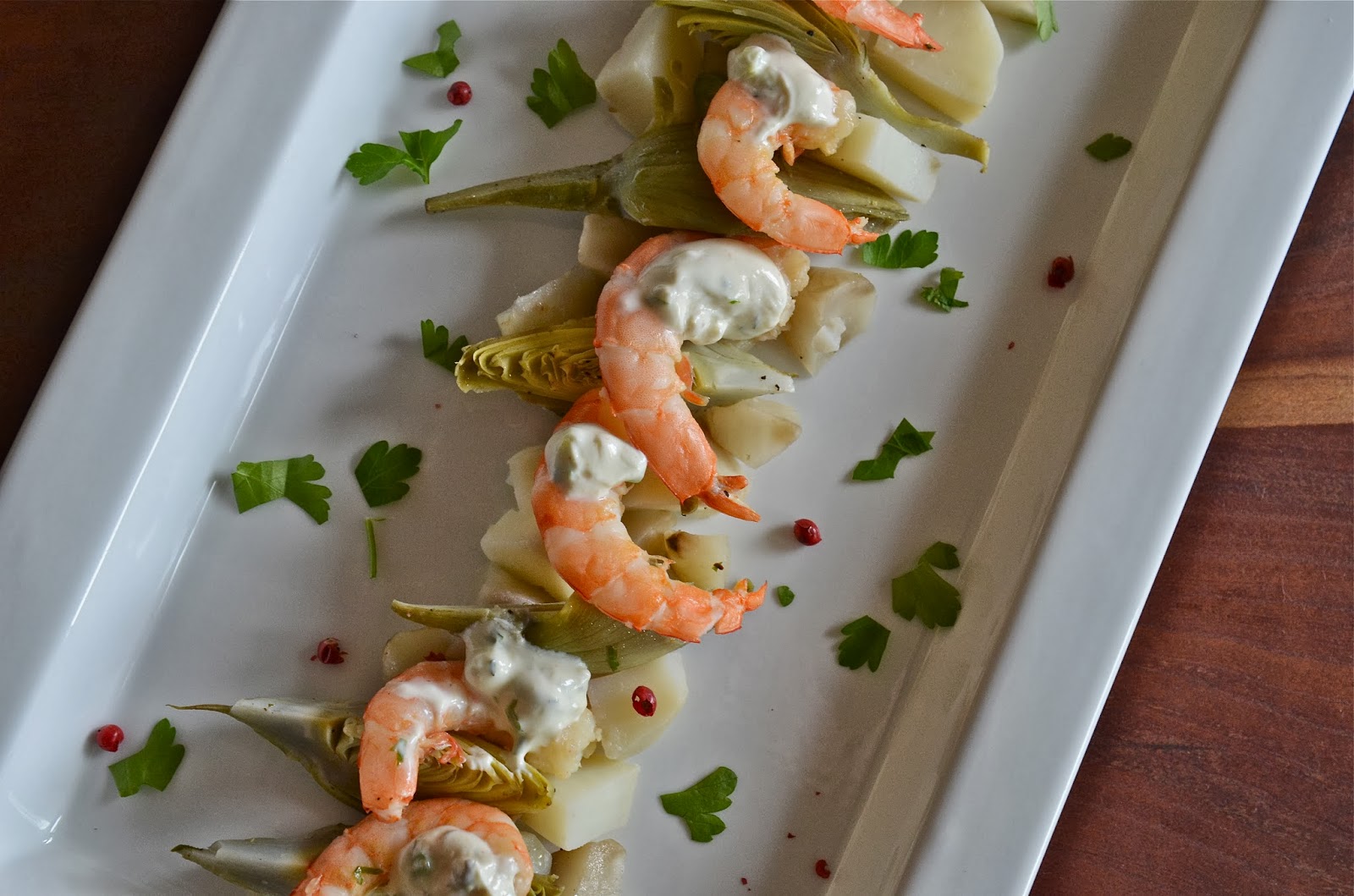
Below recipe gives an option for this salad if you do not have leftover shrimp boil. As for the roasted sunchokes and artichokes, they were leftover from another meal (with seared tuna). Note: while roasted sunchokes are divine, and will add a great dimension to this salad, they are also not always available. So add if you can find them, but don't despair if you have none. The main flavor-interaction is between the shrimp and artichokes, liaised with the sour cream "tartar". Just make sure you use fresh artichokes!

"Shrimp Boil" & Artichoke Salad with Sour Cream Tartar

Appetizer for 4

16-20 peeled large cooked shrimp
2-3 roasted sunchokes, cut into smaller pieces (optional)
4 cooked baby potatoes, halved
4 cooked button mushrooms, halved
4 cooked small artichokes, quartered*

Sour Cream Tartar
1 cup sour cream
1 tbsp Dijon mustard
1 tbsp finely chopped fresh parsley
1 clove of garlic, minced
1-2 small cornichons, chopped fine
1/2 tbsp capers (tiny ones or chopped larger ones)
1-2 slices jalapeno, chopped (optional)
1 tbsp chives, chopped fine
salt/pepper to taste
lemon juice to taste

For the sour cream tartar: mix all ingredients together, taste, and adjust to your liking. Make a little ahead so the flavors can mingle!

Being leftovers from a shrimp boil, your potatoes, mushrooms and shrimp will be bursting with flavor. Simply use as is, and arrange with artichoke quarters and sunchokes on a plate. Add dollops of the sour cream "tartar" et voila.

If your salad-ingredients do not come from a shrimp boil, you could cook the baby potatoes, mushroom and shrimp in a flavorful stock (including bayleaf, celery, bell pepper, onion, garlic, cayenne pepper) as follows: start with the potatoes, then add the mushroom, and last: add the shrimp. 


Arrange all ingredients on a plate or platter, top with the shrimp, add dollops of sour cream, and serve.
if you can't find baby artichokes, use large ones: boil them as you would an artichoke, eat the fleshy ends of the leaves with a dipping sauce, and keep the heart (bottom) for this salad.
* baby artichokes can be eaten whole. You take off the hard outer leaves, cut the sharp tops of all leaves, peel the stem back. Rub with lemon juice. I quarter the artichokes before boiling: I trim the inner core (usually fibrous and hairy in larger artichokes, in baby artichokes it's just a tiny bit of fuzz), trim the harder top some more, and then boil the quarters until soft. Immediately after, put in ice water to cool down. Drain and use.

Don't forget to like Life In The Food Lane on Facebook (here)

Sunday, December 8, 2013

Roasted Goose Heart "Waldorf"


A Recipe For Cooking Without Waste

(appetizer for 2)
1 roasted goose heart (recipe here for "Slow Roasted Date & Port Glazed Goose")
1 green apple
1-2 celeri stalks
1 handful roasted chestnuts
1 tbsp good quality mayonnaise
1/2 tbsp fresh lemon juice
1 tsp Dijon mustard

Peel the apple, and cut into chunks. Strip the celery stalks of tough fibers, and slice thin. Peel the chestnuts* and break up into chunks.

Mix mayonnaise, lemon juice and mustard into a smooth sauce.

Spoon the mayonnaise sauce through the apple, celery and chestnuts and let infuse 20-30 min.

Slice the roasted goose heart thin. Spoon the salad on a plate and top with the sliced heart.

*roasting chestnuts: cut a small cross into the outer shell (to prevent the chestnuts from exploding when roasting). Heat the oven to 200C (400F). Sprinkle lightly with water, and spread out on a baking tray. Roast for 15-20 minutes, then wrap in towel (it will loosen the shell and make it easier to peel). Peel the chestnuts when cooled down enough to handle.

"Like" Life in the Food Lane on Facebook (click here) for updates on new posts and other adventures in the Food Lane.


Tuesday, April 23, 2013

Mango Mania: Soup, Ratatouille and Upside Down Cake


“Langras from Benares, for those who liked their mangoes tart; dussebris from Lucknow for those who liked them sweet and smooth; and chusnis, small sucking mangoes for those who preferred not to eat the fruit at all but to suck the juice straight from the skin.” (from: Climbing the Mango Trees by Madhur Jaffrey)

Flaming red to pale green, the mango is a fascinating fruit. It can be oblique oval, round as an apple, flat oblong, or shaped like a kidney. It can be big as a football, or small as a duck’s egg. Mango is a stone fruit, revered for its juicy, buttery soft flesh. It has a unique aroma that lingers between peach and pineapple, with a hint of citrus.
Color is not always an indication that a mango is ripe. A ripe mango smells “ready to eat” (smell it around the stem). It has a sweet fragrance, and feels soft under the skin. An overripe mango bruises easily, and smells cloyingly sweet. You can buy unripe mangoes, and leave them at room temperature to ripen. As for fibrous mango: the flatter ones (and flesh closer to the stone) can be very stringy. In that case, hold the mango over a container and “strip-squeeze” the pulp off.

This time of year (in Dubai) sees an abundance of fresh mango flown in from India and beyond. It is an abundance that brought on a mango mania in my kitchen. Below are three recipes with mango. Enjoy!
curried carrot and mango soup, served chilled
A Three Course Mango Meal

Curried Carrot and Mango Soup 
(makes 1 liter)
2 large carrot, diced (makes about 2 full cups)
1 medium sized mango, just ripe (you want a tart, not too sweet mango), diced
1 small/medium red onion, diced
1 tbsp curry powder (use your own favorite)
1 tbsp vegetable oil
3 cups (approx) vegetable stock 
1 cup coconut milk (coconut milk + stock is about 1 liter)
the juice of 1 small lime (to taste if your mango is sweet, leave out if you use a sour mango)
salt/pepper to taste
crème fraiche (optional)
fresh koriander (optional)
  • Heat the oil. Add onions and fry gently over low heat until soft. 
  • Add the carrots, stir well and leave to cook for about 10 minutes, stirring occasionally. 
  • When the carrots have softened (and a little caramelised), add spice mix and stir.
  • Mix coconut milk and stock together and add 3/4 of it to the carrots (keeping 1/4 to add at the end if needed). Simmer for 20 minutes.
  • When the carrots are really soft (you can squash them easily with a fork), add the diced mango and simmer for another 5 minutes. 
  • Add the lime juice (if the soup is on the sweet side). Puree until smooth with a (hand-held) blender, adding the remaining stock as needed. Taste, and garnish with crème fraiche and koriander.
  • Serve hot or cold.
curried carrot soup served hot with koriander and a dollop of creme fraiche

    Ratatouille of Roasted Eggplant, Cherry Tomatoes, Red Pepper and Mango 
    (4 side portions)
    1 medium to large buttery sweet mango, diced
    1 large eggplant, diced
    1 red pepper (capsicum), cleaned and diced
    1 cup cherry tomatoes, halved
    1 medium onion, sliced
    2 cloves garlic, crushed and minced
    pinch cayenne pepper
    pinch cumin
    pinch paprika powder (preferably smoked)
    salt/pepper to taste
    • Preheat the oven to 200C. 
    • Toss the eggplant, onion, and red pepper with a little olive oil, the spices and some salt in an oven tray.
    • Roast in the hot oven for 20 -30 minutes, tossing 2-3 times. 
    • The vegetables are ready when they are starting to char a little, and have softened. 
    • Add the diced mango, mix in gently. Do the same with the cherry tomatoes. Roast for another 3-5 minutes (depending on how "roasted" you want the tomatoes to be).
    • Serve as a side dish with roast chicken, quail or duck for instance. Or with grilled fish. It makes an excellent vegetarian salad tossed with quinoa, and even better served with grilled halloumi.
    mango ratatouille with quinoa and roasted quail
    Raspberry and Mango Medley Upside Down Cake

    top
    50 gr unsalted butter
    100 gr raw cane sugar
    2 cups ripe various mango, cut into chunks*
    1 cup raspberries
    note: adjust the amounts of raspberry and mango to your own liking
    batter
    100 gr soft unsalted butter
    125 gr granulated sugar
    1 tsp vanilla extract
    pinch of salt
    1 tsp finely grated lemon peel
    2 large eggs
    200 gr self-raising flour, sifted
    ¼ cup milk (approx)

    *choose a selection of different mangoes for this cake if you can. In this one, I used badami, Alphonso, and long Kenya mango. It makes for variation in color and taste.

    Cake pan choice:
    You can choose the diameter of your cake pan depending on the kind of cake you want. A 20 cm diameter will  give you a taller cake with a thicker fruit top (it will also need longer in the oven at a slightly lower temperature (175C). In a cake pan of 25cm diameter, your cake will be more of a pie (flatter), be more sticky (the caramel has more surface to bubble into the batter).
    • Preheat the oven to 190C (175C if using a 20 cm cake pan). 
    • Melt the butter in the cake pan. Add the sugar and melt until dissolved. Let the caramel cool. Divide mango and raspberry over the caramel in a regular pattern.
    • Beat butter and sugar together until smooth and pale. Add vanilla extract and grated lemon peel. Add eggs one by one, plus vanilla extract and salt. 
    • Add half of the sifted flour and gently mix in. Add the rest of the flour . Add enough milk for a smooth, spreadable batter. 
    • Spread carefully over the arranged fruit. 
    • Bake in the oven for 30-40 minutes (slightly longer for 20 cm cake pan). Check after 30 minutes with a toothpick: if it comes out clean, the cake is done. If still wet, continue to bake and check every 10 minutes.
    • Let the cake cool for about 20 minutes, then turn over on a plate (careful, caramel is still hot)
    25 cm cake pan raspberry and mango medley upside down cake
    20 cm cake pan upside down mango cake

    • The Mangifera Indica is native to South Asia, where it was first cultivated over 4000 years ago. Legend tells that a mango grove was planted for the Buddha to find a shady place to rest. Fossil evidence found in India indicates that the mango tree already existed 25-30 million years ago.
    • Mango is a powerful antioxidant and an excellent source of Vitamins A, B, and C, minerals, and dietary fiber.
    • an extensive list of mango cultivars is found on Wikipedia (here)
    • Each year at the end of June, the International Mango Festival in Delhi is a 2-day festival where you can sample over 1100 mango varieties. 
    • Climbing the Mango Trees by Madhur Jaffrey is a memoir of storytelling and childhood memories of her family life growing up in India, with the common thread of food weaving through the book. I loved it.
    Follow Life in the Food Lane on Facebook for updates on new posts and other adventures in the Food Lane.

    Tuesday, September 25, 2012

    Braised Quail & Marinated Zucchini Salad


    This is a recipe based on leftovers. Simple, straightforward. I had leftover braised quail, but this works equally well with leftover roast chicken, or even easier: smoked salmon, prosciutto, (grilled) prawns. The choice is yours: it is all about what you have (leftover) in your fridge, and how you can use it in a creative, mouthwatering way. Or, you can go and get the same ingredients to make this refreshing salad (see below for alternative vegetarian and/or vegan suggestions).

    This is what I had:

    2 leftover quail (braised with fresh za'atar (the herb), garlic, onion, carrot, celery, and red wine)
    1 large zucchini (courgette)
    lemon
    fresh parsley
    microgreens (see picture below)
    and from the pantry: olive oil, Maldon salt flakes, and rose peppercorns

    Pluck or shred the meat from the quail carcass. If you think the meat is too dry to eat as is, add a little olive oil and some fresh lemon juice to the quail meat, and spoon through. Adjust seasoning to your liking. I did not add anything: the quail meat was tender and juicy, and well-infused with flavors from the braising liquid. Shred parsley leaves into smaller pieces and mix in with the quail meat.

    Slice the (raw) zucchini very thin. Whisk olive oil with lemon juice until well-mixed. Pour over the zucchini and carefully mix into the prepared zucchini without breaking the delicate slices. Let marinate until the zucchini slices have softened (10-20 minutes). Arrange on a plate and sprinkle salt flakes over the slices.

    Arrange the quail meat in the middle on top of the zucchini slices. Garnish with the rose peppercorns and microgreens (if you don't have these, use garden cress and a combination of green herbs such as parsley, basil, and chives).


    VEGETARIAN VERSION: USE CRUMBLED GOAT CHEESE (WITH A LITTLE HONEY AND THYME)

    VEGAN VERSION: USE ROASTED RED PEPPER (PEELED & SEEDED) AND FRESH BASIL


    microgreens: mustard cress (left), shiso cress (middle), and one I forgot the name of

    zucchini carpaccio: same marinade (here with shredded basil) and preparation for the raw zucchini

    Friday, September 21, 2012

    The Poetic Power of Beetroot


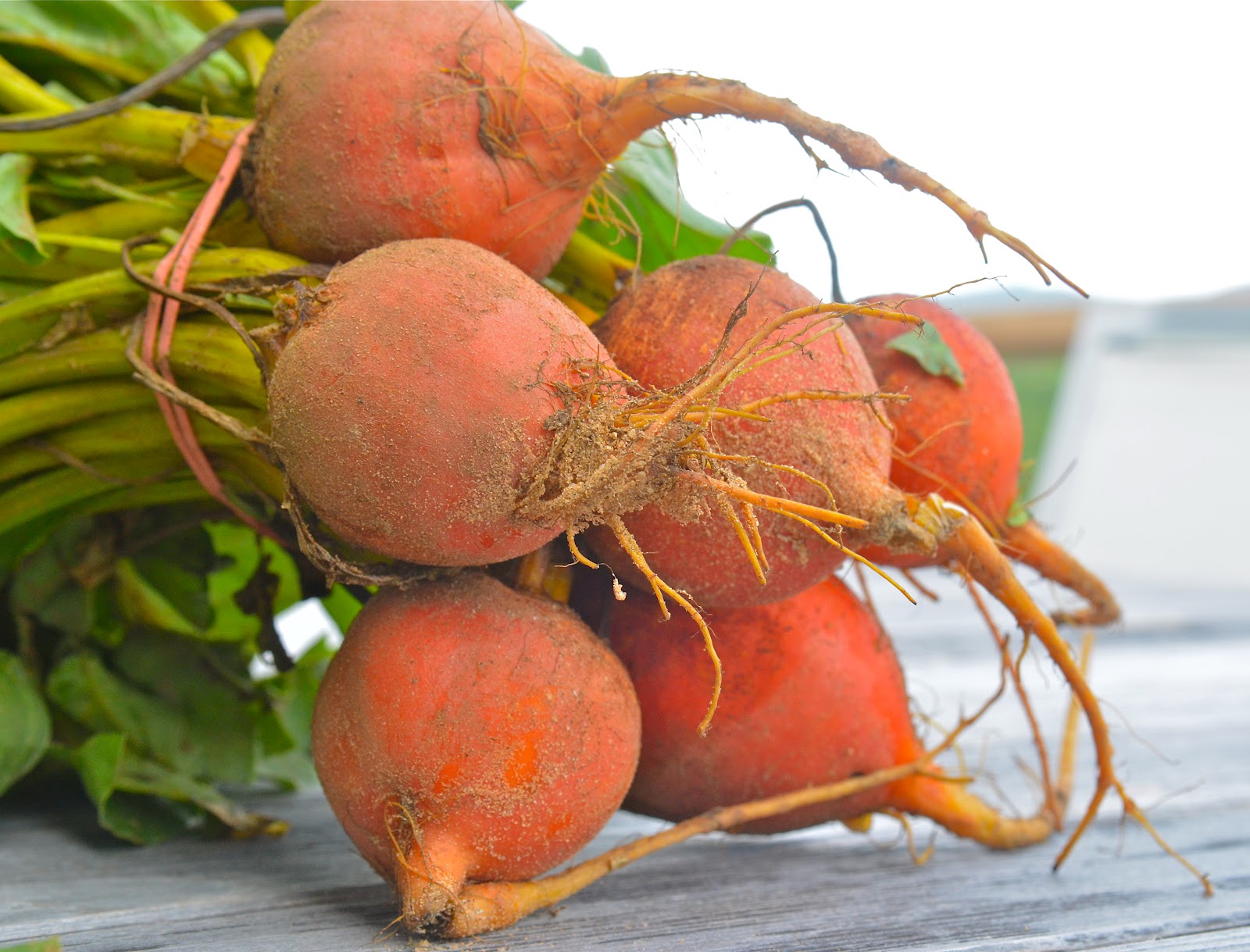
    Golden goodness in a glass. Deliciously sweet in a savory way, naturally creamy, and bursting with beet. This is a recipe that thrives on pure ingredients. Not much is added to the boiled golden beetroot, other than a light (organic) vegetable stock. It is served here with crispy baked kale chips: the bitter-green crunch provided a perfect counterbalance to the sweet beet.


    Sliced very thin, raw beetroot is delicious. It is crunchy like biting in an apple, fresh in flavor too. It has to be sliced very, very thin though, as any thickness will make you feel like a horse munching on sugar beet. Toss the thin slices with freshly squeezed lemon juice, fruity olive oil, (sea) salt flakes and very finely chopped fresh parsley and/or fresh thyme leaves.


    And then, roasted golden beetroot. It looks like it is candied, and actually it tastes like it too. Except, there is no sugar used. None! It is the beetroot's natural sugars that caramelize when roasted. So many ways to enjoy roasted beetroot. This summer again, I had them simply tossed with white truffle oil, a little fresh lemon juice, and salt flakes. Topped with a few "rosettes" of smoked duck breast, it is the best appetizer!


    Cream of Golden Beetroot (optional: with Crispy Baked Kale Chips)
    (recipe for 4 as a starter)

    2 golden beets, boiled (the flavor is more subdued than when using bursting-with-flavor roasted beets)
    1 liter good vegetable stock (from cube is fine)
    1 clove of garlic, crushed
    1 small onion, diced fine
    1 tbsp of olive oil
    a dash of double cream (optional)
    a squirt of fresh lemon juice

    Peel the boiled beets and cut into cubes.

    Bring the stock to a boil, simmer softly. If you use cubes, dissolve in boiling water first, rather than adding stock cubes to the "soup" later on. This way, you can control the flavor of your stock better.

    In a pan, heat the olive oil, add the onions and slowly (on low heat) soften the onions. This takes about 8-10 minutes. Try not to color the onions, but keep them translucent and light. Add the garlic, and cook with the onions for a quick minute, just to soften a little.

    Add the cubed beetroot to the onions and garlic. Add enough vegetable stock to cover, bring to a boil and let all flavors infuse by simmering up to 15 minutes. Puree with a hand-held mixer or in the blender off-heat until smooth and silky. If the pureed beets get to thick, add more stock until you have a smooth, thick yet "soupy" consistency. Add a dash of double cream if desired. Add a squirt of lemon juice, adjust seasoning if needed, spoon through and your Cream of Beetroot is done. You can serve this soup cold or hot.

    Obviously, you can make this soup even richer in flavor by using roasted beetroot. And if you have no yellow beet, the same recipe is for red beetroot.

    For the Baked Kale Chips, I wash and dry the kale leaves (without stalks), toss them with coarse salt and a little olive oil. Spread out on a baking tray, I bake them at low temperature (140C) for about 20 minutes, until they are crisp.

    A Mountain Of Kale Chips: Nutritious & Delicious, You Can Never Have Enough


    Tuesday, June 19, 2012

    Crispy Konafah Egg & Mesclun


    Not long after they first opened, we enjoyed a delicious evening at Table 9. On the delectable menu was a hen's egg on porcini mushrooms three ways. It was the porcini that made me choose the dish, yet it was the egg that contributed highly to the "wow" factor. This soft boiled and lightly panko- breaded egg oozed its runny yolk lip-smacking deliciously over the fresh, dried, and pureed porcini.

    Inspiration is the base ingredient of any dish. And boy did that egg inspire me. For the longest time in my day dreams, I could still taste that heavenly combination of flavors and textures. It also inspired me to fumble around in the kitchen boiling eggs and rolling them in konafah (shredded filo pastry that looks like vermicelli). The konafah-idea had been sitting in my mind for a while, ever since the "hairy prawns" I had at Yo Sushi.

     
    Mesclun
    I remember asking a French chef once, many years ago, what was "mesclun", my asking tone suggesting I expected a detailed epicurean explanation. "Ah bon, mais... mesclun... c'est... mesclun." It was another chef who elaborated that "mesclun" is derived from the Provençal dialect (mescla) for mixed. Mesclun is said to originate in the Provence near Nice as a mix of the young leaves and shoots of wild plants. In culinary terms, mesclun is a mixture of young salad and herb leaves, each bringing its own taste quality to the mix: a little peppery, refreshing, herbal, or a little bitter. Mesclun is now a world-wide household name for any mixture of young salad leaves - which is where the line should be drawn. Even if the name literally does mean "mixed", not any "mixed salad" is a mesclun. 

    In Dubai, when I am in the mood to mescla, I go for the local, peppery rocket (also known as rucola, arugula, or roquette), I like to add aromatic herb leaves (like lemon basil or fennel dill). And I love the taste and color combination of the small, bright-green savory leaves of purslane, as well as the red-purple, spinach-like small leaves of red orach. Obviously, mood is not all that determines a mix: so does availability of fresh young salad.


    Crispy Konafah Egg and Mesclun
    (recipe for 4)

    4 soft boiled eggs
    1 sheet of konafah (I get it frozen)
    mesclun ready-mixed, or mix young salad leaves yourself
    vinaigrette*

    To boil the eggs:
    It took me several attempts to achieve a boiled egg where the white outside was firm, yet inside the yolk was runny. And didn't burst the moment I shelled the egg. The word "therapeutic" sprang to mind as I patiently started over when the egg was not of a desired texture. I was happy with eggs that had a soft, slightly runny yolk, and did not break open the moment I shelled the egg. It is still a very fragile egg, so handle carefully. Using medium-sized eggs, I tried two methods. First I boiled the eggs from cold (tap-water temperature) for 7 minutes exactly (it took about five minutes for the water to come to a boil). When 7 minutes were up, I dunked the eggs in ice cold water and started shelling them immediately. For the other method, I cooked the eggs for 3 minutes in boiling water. Both methods yielded firm egg whites with runny egg yolks. If you like the idea, but cannot be bothered with fragile eggs, just boil them a little longer. A boiled egg in a crispy fried "coat" is always nice to eat, with or without runny yolk.


    The pastry:
    Konafah shreds easily (after all, it is shredded filo pastry). To roll the egg in the pastry, you need the konafah to be a little moist (which it is when you use it barely defrosted. I tried it recently with dry and well-defrosted konafah, and it was just a nightmare: the spriggy pastry went every direction, and it just would not sit. So, a little moisture if the konafah is too dry!). Place a rectangular amount of the pastry on a work surface. Place a boiled egg three-quarts down the end and roll the pastry around the egg carefully. Proceed until all eggs are rolled. Deep-fry briefly (it takes only 2-3 minutes for the konafah pastry to crisp up and turn golden), drain on kitchen paper and serve immediately alongside the mesclun (do not place on top of the mesclun: the tender leaves will wilt).

    vinaigrette
    1 tsp Dijon mustard
    1 tsp freshly squeezed lemon juice
    1 tsp (red wine) vinegar
    1/2 tsp honey (optional: if you like a hint of sweetness with the savory egg)
    olive oil
    salt to taste

    In a bowl, whisk together mustard, honey, lemon juice and vinegar. Slowly pour in olive oil and continue to whisk until the emulsion binds and you have a creamy looking, smooth vinaigrette.

    Drizzle the vinaigrette over the mesclun just before serving. As the eggs are not seasoned, add a little salt to the opened egg before you eat it. 


    as a vegetarian main course, it goes wonderful with green asparagus, roasted sweet potatoes, and a mustard bechamel